Agricultural Post Hole Borers: A Overview to Power & Results
Agricultural Post Hole Borers: A Overview to Power & Results
Blog Article
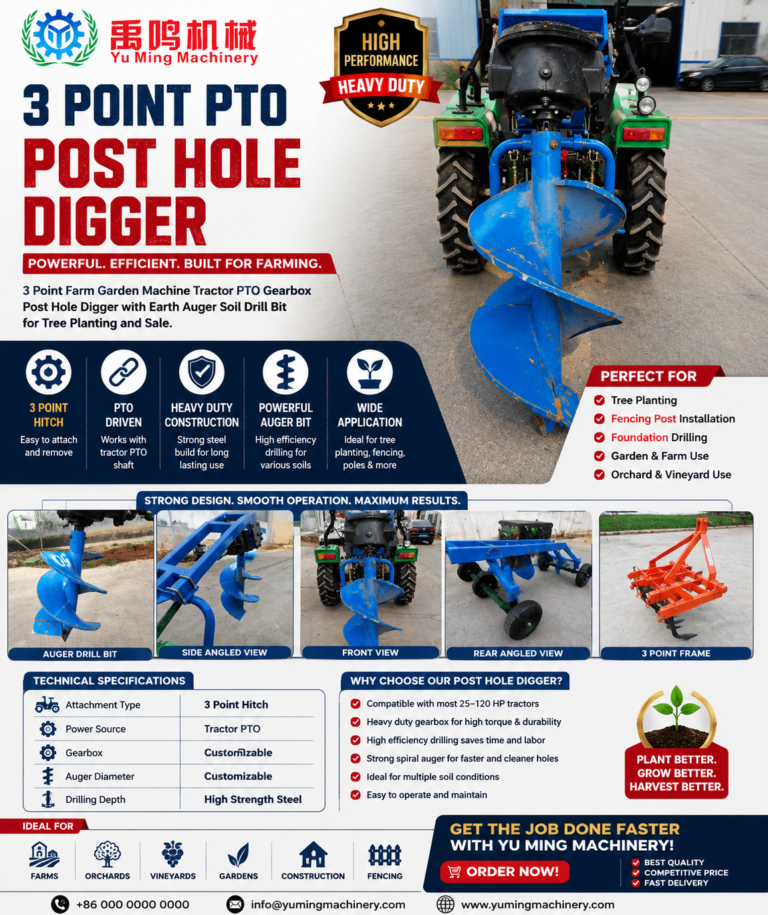
For landowners , tackling fence projects or setting posts can be a lengthy task. Thankfully , tractor post hole diggers offer a significant boost to productivity. These powerful attachments, mounted on your existing tractor, quickly excavate holes for fence posts, signs, or other similar applications. Available in various models – from hydraulic to PTO-driven – they provide considerably more force and enable you to dig deeper and faster than manual methods. Choosing the right digger depends on factors like soil conditions, post size, and the volume of holes needed; consider characteristics such as digging depth, auger diameter, and whether it's compatible with your specific tractor model for optimal performance . With a quality machine, you can transform a day-long chore into a much more manageable undertaking.
3-Point Tractor Augers: Excavating Deeper with Convenience
Tractor augers are a vital piece of equipment for any farmer or landowner needing to place fence posts, dig planting holes, or tackle other tough earthwork. Particularly soil conditions are hard, a 3-point tractor auger provides an substantial advantage over manual labor, greatly reducing the time and physical effort required. These attachments connect directly to your tractor’s 3-point hitch system, transforming it into a powerful excavation machine capable of creating precise and consistent holes with minimal fuss. Considerations such as auger size, horsepower requirements, and ground conditions are important when selecting the right model for your needs, but the overall benefit – a quicker, easier way to dig – is undeniable.
- Reduces Labor Costs
- Boosts Efficiency
- Delivers Consistent Results
PTO Earth Auger Buying Guide: Choosing the Best Soil Machine
So, you're needing a PTO earth auger to tackle your digging projects? Excellent! But with so many varieties available, acquiring the perfect one can feel daunting . This guide will lead you through the key factors to consider. First, determine your project's size; are you drilling a few small holes for fences or undertaking larger tasks such as planting trees and posts? This dictates the necessary width – augers typically range from 4” to over 36”. Following that, assess your tractor’s PTO horsepower; the auger needs sufficient power to operate efficiently. Ensure compatibility with your PTO shaft size (5/8" ) and type (Category 1 or 2). Finally , consider the terrain; rocky soil necessitates a heavy-duty auger with robust teeth.
- Diameter / Width / Bore – align to your needs
- Horsepower / Power / Engine Strength – verify tractor compatibility
- PTO Shaft Size / Dimensions / Length – critical for connection
- Terrain Conditions / Soil Type / Ground Composition - affects auger durability
Maximize Your Planting: Tractor PTO Soil Drills Explained
Want to improve your planting output? A tractor-powered PTO soil drill, also known as a seed drill or precision planter, is a fantastic machine for farmers and gardeners alike. These implements allow you to sow seeds directly into the ground in perfectly spaced rows, leading to more uniform growth and potentially higher yields. Unlike broadcasting, which can result in uneven distribution and wasted seed, PTO drills accurately place each seed at the ideal level for optimal germination. They are particularly beneficial for crops such as wheat , but also work well with peas . Consider factors like your acreage, soil type, and the types of seeds you plan to plant when selecting a PTO drill; options range from small, maneuverable models suitable for gardens to large-scale units designed for expansive agricultural fields. Here's how they benefit agricultural post hole auger you:
- Reduces seed waste
- Facilitates even crop maturation
- Improves planting speed and reduces labor.
Post Hole Depth and Size: Matching Your Auger to the Job
Selecting the correct post hole auger involves understanding both the required depth and the diameter of your holes. Generally, fences typically require holes between 24 and 36 units, but decks or structures needing deeper footings might necessitate excavations ranging from 48 to 72 units. Assess the soil conditions as well – rocky ground will likely need a more powerful, heavy-duty machine. The digger's diameter should match your post size; a common range is 6 to 12 feet , but larger posts may demand an even greater hole. Remember to check local building codes for specific requirements regarding post hole depth and sizes. Using the wrong size could compromise structural integrity .
Tractor Earth Augers vs. Hand Digging: A Productivity Comparison
When dealing with a substantial hole-digging job, the choice between a tractor-mounted earth auger and traditional hand digging represents a critical difference in both time and labor. Generally, excavating by hand, even with tools like shovels and picks, proves incredibly leisurely – requiring considerable physical exertion for a relatively small amount of material moved. Conversely, utilizing an earth auger attached to a tractor dramatically increases productivity; it can often complete the same task in a fraction of the time, permitting fewer workers and significantly reducing overall labor costs. While hand digging may be appropriate for minimal holes or areas with limited access, a tractor auger is virtually unbeatable when dealing with multiple or larger diameter post holes for fencing, landscaping, or other similar uses.
Report this page